
















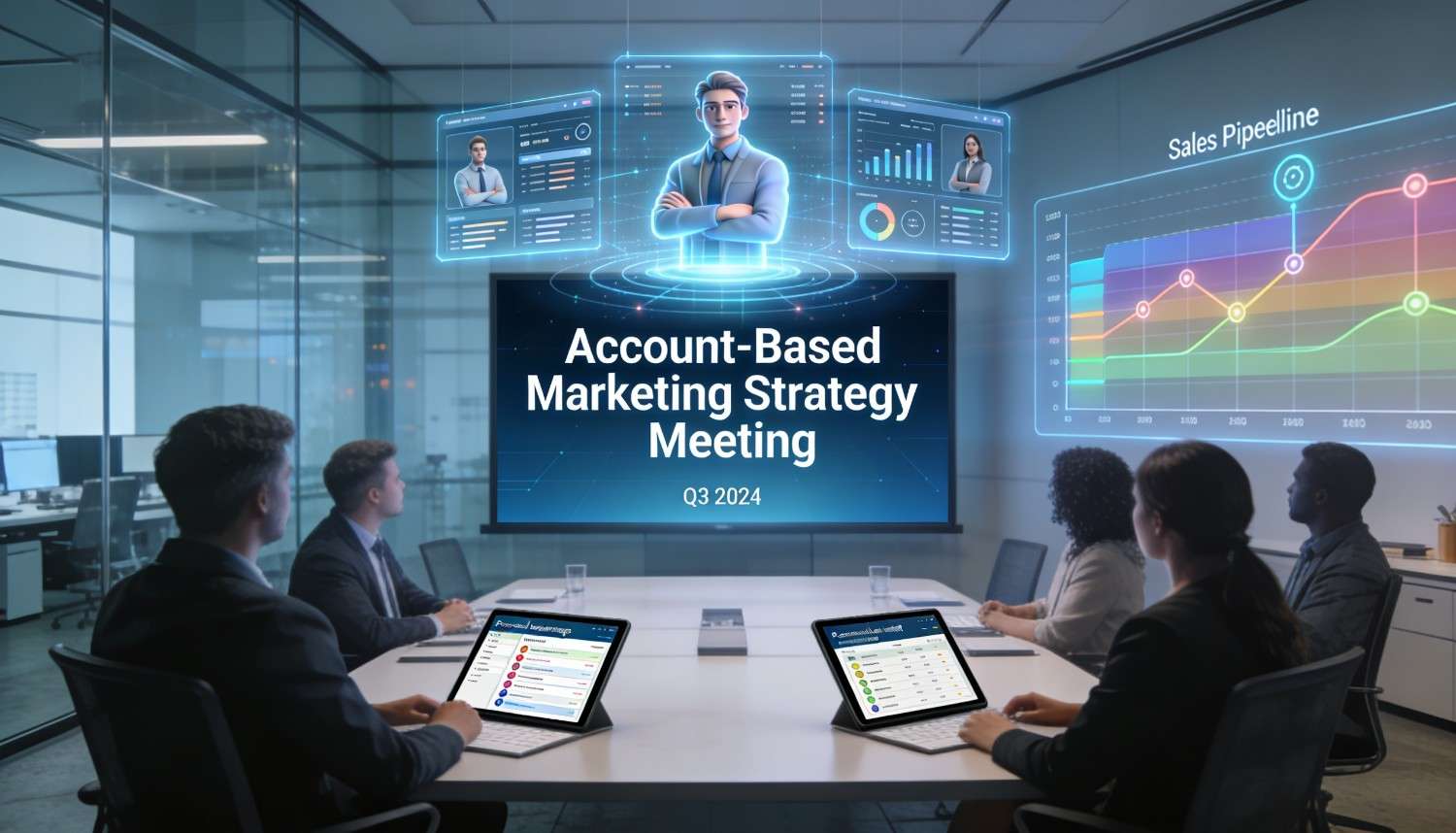
Casting a wide net in corporate client acquisition has become an expensive way to gather empty clicks. For enterprise organizations selling high-ticket software, complex logistics systems, or industrial machinery, a traditional marketing funnel that prioritizes massive lead volume frequently creates friction between sales and marketing teams. Marketing departments celebrate thousands of cheap ebook downloads, while sales executives grow frustrated sorting through underqualified inquiries from businesses that lack the budget, authority, or structural need for their services. When a single closed deal can be worth six or seven figures, treating target clients as an anonymous, generalized audience is an operational bottleneck. Partnering with a specialized b2b marketing agency allows growing organizations to flip the traditional funnel on its head, swapping wasteful mass-broadcasting strategies for targeted campaigns that speak directly to key decision-makers.
The fundamental shift from volume-driven marketing to hyper-targeted precision requires a deep change in corporate growth strategies. Enterprise deals are rarely decided by a single executive sitting in an isolated office. Modern corporate purchasing decisions involve a complex committee of stakeholders, including financial officers reviewing long-term ROI, IT directors auditing cybersecurity compliance, and operations managers evaluating daily workflow disruption. Winning these complex accounts demands an integrated marketing strategy that addresses the specific pain points, regulatory hurdles, and operational needs of each individual stakeholder within a target organization.
The Costly Flaws of Traditional Demand Generation
Relying entirely on standard inbound marketing tactics to land enterprise clients introduces significant inefficiencies that can quietly drain your corporate marketing budgets.
Severe Resource Dilution in Sales Pipelines
When marketing teams focus solely on generating a high volume of leads, sales representatives spend a huge portion of their valuable time chasing small business owners or entry-level employees who do not have the purchasing power or organizational scale to buy your product. This dilution pulls focus away from the high-value accounts that drive major revenue growth.
Fractured and Inconsistent Brand Messaging
Broad advertising campaigns are naturally forced to use generic, high-level language to appeal to a wide audience. Unfortunately, this lack of specificity fails to resonate deeply with sophisticated enterprise buyers, who require highly technical, industry-specific solutions tailored to their exact operational realities.
Distorted and Unreliable ROI Metrics
High numbers of website visits, click-through rates, and content downloads often create a false sense of marketing success. If these digital interactions fail to translate into qualified sales opportunities, discovery calls, and closed contracts, your marketing spending is essentially driving vanity metrics rather than real business growth.
The Strategic Power of Hyper-Targeted Account Selection
To break out of the high-volume, low-conversion loop, forward-thinking enterprise companies are shifting toward a highly concentrated growth strategy. This methodology treats individual high-value target companies as their own distinct marketplaces.
By concentrating your creative talent, analytical research, and media budgets on a carefully selected list of best-fit target accounts, you eliminate the waste associated with broad-spectrum advertising. Implementing a structured framework for account based marketing ensures that your sales and marketing teams operate in perfect harmony, focusing their joint energy on the specific corporate entities most likely to generate substantial lifetime value for your business. According to extensive B2B buyer behavior insights published on HubSpot, organizations that align their revenue-generating departments around a unified account strategy experience more than thirty percent higher annual revenue growth compared to competitors running disconnected campaigns.
Architectural Pillars of High-Conversion Growth Frameworks
Transitioning from a general inbound marketing model to a highly precise corporate pursuit requires a structured approach built on data, personalized messaging, and coordinated outreach. Industry leaders rely on four foundational stages to successfully deploy a modern enterprise growth engine.
Ideal Customer Profile Definition and Account Selection
The bedrock of any precision campaign is defining exactly what an ideal client looks like beyond basic industry and employee size parameters. True optimization requires evaluating technological infrastructure, current funding rounds, market expansion plans, and specific operational gaps. This exhaustive research results in a highly curated list of target accounts that possess an authentic, immediate need for your specialized services.
Cross-Departmental Alignment and Shared Goals
A major reason broad campaigns fail is the structural divide between marketing and sales departments. A precision framework forces these teams to function as a singular, highly coordinated unit. Both departments participate in target account selection, collaborate on personalized messaging strategies, and share accountability for the same revenue milestones, ensuring a seamless experience for the target client.
Highly Personalized Content Infrastructure
Enterprise buyers completely ignore generic sales pitches and boilerplate product brochures. High-conversion frameworks require creating bespoke content assets—such as customized whitepapers, account-specific video breakdowns, and tailored landing pages—that address the exact challenges faced by a target company’s executive committee, establishing your brand as a trusted expert.
Multi-Channel Orchestration and Persistent Tracking
Engaging modern corporate decision-makers requires showing up across multiple physical and digital environments over time. A balanced strategy coordinates personalized LinkedIn advertising, hyper-targeted programmatic display networks, executive dinner invitations, and direct peer-to-peer outreach from your sales team, ensuring your message builds steady momentum without overwhelming the prospect.
Optimizing the Digital Touchpoints of Modern B2B Buyers
The digital footprint of your enterprise brand acts as a virtual storefront where sophisticated corporate buyers silently audit your capabilities long before they ever agree to speak with a sales representative. If a target executive clicks on a personalized ad only to arrive at a slow, generic, or confusing website, the trust you built evaporates instantly.
Modern digital assets must be built from the ground up to support highly responsive, personalized user experiences. Advanced web platforms can detect the company domain of incoming corporate visitors in real-time, allowing the site to automatically alter its headlines, display industry-specific case studies, and highlight relevant product features tailored to that viewer’s specific market sector. Prioritizing fast load speeds, clean typography, and intuitive navigation across both mobile and desktop screens ensures that your brand presents a polished, enterprise-grade image that confirms your expertise and encourages deeper interaction.
Overcoming the Complexity of Extended Sales Cycles
The ultimate test of a sophisticated abm marketing strategy lies in its ability to maintain engagement over a corporate sales cycle that can span anywhere from six months to over a year. During these extended evaluation windows, target accounts are highly vulnerable to internal re-organizations, changing budget priorities, and competitive counter-offers.
To protect your pipeline, your marketing infrastructure must continuously deliver value to every tier of the target client’s decision-making unit. While your sales team handles active negotiations with procurement directors, your marketing campaigns should simultaneously run educational background ads for upper-level board members, highlighting your company’s long-term financial stability, implementation speed, and global support capabilities. This multi-layered approach ensures your brand remains top-of-mind, de-risks the purchasing decision, and accelerates final contract approval.
Securing Long-Term Enterprise Dominance
Your ultimate shield against shifting economic trends and aggressive competitive undercutting is not your baseline product feature list or your entry-level pricing structures—it is the depth of trust you build with your target market. Competitors can copy software features and match pricing discounts, but they cannot easily replicate a deeply customized, multi-layered relationship established through months of personalized, value-driven communication. Investing in a highly precise, data-driven B2B growth engine is a smart strategic decision that protects your pipeline, maximizes your average contract value, and positions your organization as an indispensable market leader.
If you are ready to stop wasting valuable resources on low-value leads and build a highly sophisticated client acquisition system that commands attention from the world’s largest enterprises, it is time to upgrade your marketing approach. Elevate your brand authority, align your internal revenue teams, and unlock your true enterprise scaling potential by partnering with established B2B growth specialists. Explore the complete strategic frameworks, personalized campaign models, and enterprise success case studies available at Oxper today to discover how professional precision marketing can transform your commercial trajectory.