
















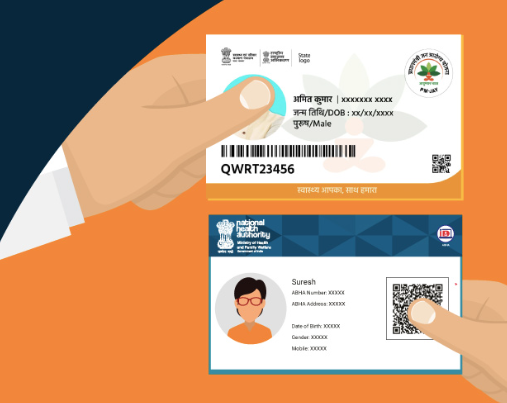
The Ayushman Bharat Health Account — the ABHA card — is India’s national digital health identity system, assigning each registered individual a unique 14-digit number that serves as the anchor for their portable digital health record.As India’s digital health ecosystem expands under the National Digital Health Mission, the ABHA card is increasingly becoming the key mechanism through which health records are created, stored, and shared across healthcare providers. Understanding what the ABHA card is, how to get it, and how it works in practice prepares any Indian citizen to participate fully in the digital health infrastructure being built.
What the ABHA Card Is and What It Enables
An ABHA card is not a health insurance card — it is a health identity document. It enables the digital creation, storage, and controlled sharing of your health records: consultation notes, prescriptions, diagnostic test results, discharge summaries, and immunisation histories. The ABHA card download the identity document representing this health account. When you visit any ABHA-integrated healthcare facility and provide your ABHA number, the facility can link their records of your treatment to your ABHA account (with your consent). Over time, this builds a longitudinal digital health record that any authorised healthcare provider you visit can access — eliminating the problem of incomplete medical histories when consulting new doctors and enabling more informed, continuity-of-care-based medical decision-making.
What You Need Before Starting the ABHA Card Download
The ABHA card download requires one of two identity documents: Aadhaar or a driving licence. For Aadhaar-based registration — the most common path — your Aadhaar number and the mobile number linked to Aadhaar are needed. The OTP for identity verification is sent to the Aadhaar-linked mobile number, which must be accessible during the registration process. For driving licence-based registration, the DL number is used for identity verification instead. Beyond the identity document and linked mobile number, no other paperwork is required. The process is completed entirely online and takes under ten minutes.
The ABHA Card Download Process
Navigate to the Ayushman Bharat Digital Mission website at abdm.gov.in, or download the ABHA mobile application from Google Play or the App Store. On the portal or app, select the option to create or register for an ABHA account. Choose Aadhaar-based registration, enter your Aadhaar number, and request the OTP sent to the Aadhaar-linked mobile number. Enter the OTP to verify identity. The system generates a unique 14-digit ABHA number and creates the ABHA card. This card is immediately available for download as a PDF. Save the downloaded card and optionally print a copy for physical use.
How Your Abha Health Account Accumulates Records Over Time
The ABHA card download creates the account and the identity document, but the health records stored in the account are built up over time through interactions with ABHA-integrated healthcare providers. Each time you visit a registered hospital, clinic, or diagnostic centre that is part of the National Digital Health Ecosystem, you can provide your ABHA number and consent to linking that provider’s records to your account. You retain full control: you choose which facilities can access your records, which records are linked, and which can be seen by new providers. Records cannot be added to your account without your active consent, and you can review and manage access permissions through the ABHA app.
The Connection to Health Insurance
As health insurance companies and hospitals integrate with the ABHA ecosystem, the ABHA number is increasingly becoming the identifier that links insurance policy records, hospitalisation records, and health history in a single accessible repository. Some insurers now allow policyholders to link their ABHA number to their insurance account, enabling faster cashless claim processing because the treatment records are already accessible to the TPA through the connected health account. Completing the ABHA card download positions any policyholder to take advantage of these integrations as they expand, reducing administrative friction in the health insurance claim process.
Privacy and Data Security
A common concern about digital health records is the security and privacy of sensitive personal health information. The ABHA system operates on a consent-based architecture: no data can be accessed or shared without explicit consent from the account holder. Records stored in the ABHA ecosystem are encrypted and accessible only through consent-gated mechanisms. The account holder can revoke access permissions granted to specific providers at any time. The National Digital Health Mission’s data governance framework includes privacy protections aligned with India’s evolving digital data protection legislation. Understanding this consent-based architecture should address concerns about the ABHA card creating uninvited access to personal health records.
Conclusion
The ABHA card download is a brief registration process with long-term value as India’s digital health infrastructure continues to evolve. Creating your ABHA account establishes the foundation for a lifelong digital health record that grows with every healthcare interaction at participating facilities. It also complements health insurance plans by simplifying document verification, improving access to digital medical records, and reducing paperwork during eligible claims. The account is secure, consent-based, and increasingly integrated with India’s healthcare and insurance ecosystem to minimise administrative delays. Whether your goal is better healthcare continuity, smoother insurance claim processing, or participation in India’s expanding digital health network, completing your ABHA registration is a smart step toward more efficient health management.