
















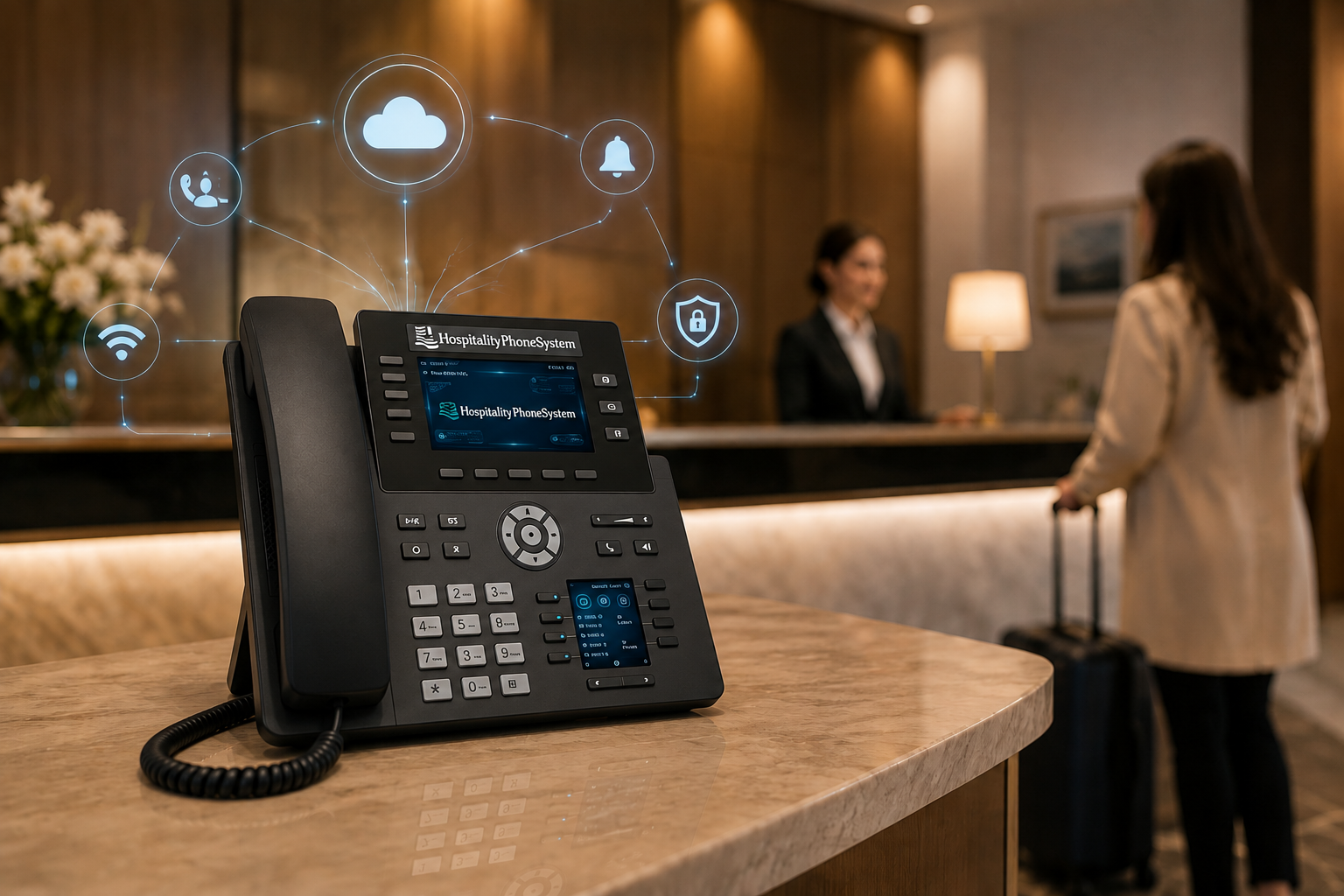
Guest expectations have changed. Travelers in 2026 expect instant responses, seamless in-room communication, and front-desk staff who can resolve issues in seconds — not minutes. Behind every one of those smooth interactions is a phone system built specifically for the way hotels operate. Finding the best hotel VoIP phone system isn’t about picking a generic business phone plan and hoping it fits; it’s about understanding what makes hospitality communication fundamentally different, and choosing a platform designed around those differences.
This guide walks through why traditional phone systems are failing hotels, what to look for in hotel VoIP providers, and which platforms are worth your attention this year.
The Problem With Legacy Phone Systems in Hotels
Most hotels are still running on aging on-premise PBX hardware — systems that were installed a decade or more ago and were never designed to talk to modern property management software, mobile apps, or cloud-based guest services. These legacy systems create daily friction:
- Front desk staff manually transferring calls between departments with no visibility into guest history
- Maintenance teams juggling phone lines that break during storms or power outages
- No way to track missed calls from guests trying to reach housekeeping or room service
- Expensive per-line costs that make expanding to a new wing or property painfully costly
This is exactly the gap that voip for hotels was built to close. By moving call infrastructure to the cloud, hotels eliminate the physical hardware bottleneck entirely while gaining visibility and control that legacy systems simply can’t offer.
Why Hotels Need a Purpose-Built Phone System, Not a Generic One
It’s tempting to assume any standard office VoIP platform will work fine for a hotel. In practice, hospitality properties have operational demands that generic systems weren’t built to handle. A proper hotel phone system voip setup needs to account for:
Room-to-room and room-to-department dialing — Guests need to reach the front desk, housekeeping, or room service using simple, memorable extensions, not complicated phone trees designed for corporate offices.
Guest privacy and do-not-disturb sync — When a guest activates do-not-disturb, the phone system should automatically silence incoming calls to that room without staff needing to manually intervene.
Multilingual voicemail and IVR — International properties need call menus and voicemail greetings that can switch languages based on guest profile data pulled from the property management system.
PMS and check-in/check-out integration — When a guest checks out, their room’s phone line should automatically reset, clear voicemail, and become available for the next reservation without manual staff work.
Emergency and compliance routing — Hotels have specific regulatory requirements for how emergency calls are routed and logged, something most general business VoIP platforms don’t account for out of the box.
None of these are edge cases — they’re the daily operational reality of running a hotel. This is why hotel voip providers who specialize in hospitality consistently outperform generalist platforms when it comes to guest satisfaction scores and staff efficiency.
What Makes the Best Hotel VoIP Phone System
Before comparing specific platforms, here’s a checklist to use when evaluating any best hotel voip phone system candidate:
Reliability During Peak Occupancy
Your phone system needs to handle simultaneous call volume during check-in rushes, event bookings, and busy holiday weekends without dropped calls or delayed routing.
Seamless PMS Integration
The platform should sync directly with your property management system so room status, guest names, and language preferences flow automatically into the phone system.
Multi-Property Management
For hotel groups and management companies, a single dashboard to oversee call activity, staffing, and configurations across every property saves enormous administrative overhead.
Mobile and Cordless Compatibility
Housekeeping and maintenance staff are rarely at a desk. The system should support mobile apps or cordless handsets so staff can respond to guest requests from anywhere on the property.
Detailed Reporting and Analytics
Management needs visibility into call volume by department, average response times, and missed call trends to continuously improve guest service.
Top Picks: Best Hotel VoIP Phone System for 2026
Here are the standout platforms hotels should be evaluating this year.
1. Hospitality Phone System
Hospitality Phone System leads our list, and for good reason — it’s built exclusively for hotels, resorts, and hospitality groups rather than adapted from a generic business tool. Their platform natively supports room-to-room dialing, automated do-not-disturb sync, multilingual voicemail, and deep PMS integrations that eliminate manual front-desk work. For hotel groups managing multiple properties, their centralized dashboard makes it possible to oversee every location’s call activity from a single login. If you’re comparing hotel voip providers and want a platform that was designed around hospitality workflows from day one rather than retrofitted for hotels, their hotel VoIP phone system page details exactly how their solution handles high call volumes, department routing, and property-wide configuration — worth reviewing closely before making a decision.
2. Mitel Hospitality
Mitel has a long-standing presence in the hospitality industry, offering deep integrations with major PMS platforms and strong support for large resort properties with complex departmental structures.
3. Zultys for Hospitality
Zultys offers configurable call flows suited to boutique hotels and smaller independent properties that need flexibility without enterprise-level complexity or pricing.
4. Vonage Business (Hospitality Add-Ons)
Vonage’s core business platform, paired with hospitality-specific add-ons, works well for hotel groups that want unified communication across both guest-facing and back-office departments.
5. NEC Univerge for Hotels
NEC’s hospitality-focused offering is a solid choice for properties that already use NEC hardware and want a gradual migration path to cloud infrastructure rather than a full rip-and-replace approach.
Cloud Phone System Hotels: How the Transition Actually Works
Many hotel operators hesitate to switch because they assume migrating to a cloud phone system hotels solution will disrupt daily operations. In reality, a well-planned migration is far less disruptive than most expect:
Pre-Migration Audit — Your provider reviews existing room lines, department extensions, and current PMS setup to map out the new configuration.
Parallel Testing — Many providers run the new cloud system alongside your existing setup for a short period, allowing staff to test call flows without fully cutting over.
Phased Rollout by Wing or Floor — Larger properties often migrate floor by floor or wing by wing to minimize the risk of disrupting guest service during the switch.
Staff Training and Go-Live — Front desk, housekeeping, and maintenance teams receive hands-on training with the new mobile apps and handset interfaces before the system goes fully live.
Because cloud infrastructure doesn’t require new wiring throughout the property, most hotels complete a full transition in a matter of weeks rather than the months a legacy hardware overhaul would require.
Matching the Right Platform to Your Property Type
Not every hotel has the same needs. Here’s how to think about voip for hotels based on property size and type:
Boutique and Independent Hotels (Under 100 Rooms) Prioritize ease of setup, affordable per-room pricing, and simple mobile-first tools for a lean staff that wears multiple hats.
Mid-Size Hotels and Regional Chains (100-300 Rooms) Look for strong PMS integration and departmental call routing to keep front desk, housekeeping, and maintenance communication organized as staff size grows.
Large Resorts and Multi-Property Groups (300+ Rooms or Multiple Locations) Multi-property dashboards, detailed analytics, and dedicated account support become essential at this scale, since a single dropped call or misconfiguration can affect guest experience across an entire property.
Frequently Asked Questions
Does a hotel phone system voip setup require new in-room hardware? Not necessarily. Many providers support existing in-room phones through VoIP adapters, though upgrading to modern cordless or IP handsets often improves call quality and unlocks additional features.
How much does hotel VoIP typically cost per room? Pricing varies by provider and feature set, but most hospitality-focused platforms charge a predictable per-room monthly rate rather than complex per-line hardware fees, making budgeting significantly easier than legacy systems.
Can small independent hotels afford a dedicated hospitality VoIP platform? Yes. Many hotel voip providers now offer tiered pricing specifically designed for smaller independent properties, so boutique hotels don’t need enterprise budgets to access hospitality-specific features.
What happens to phone service during a power or internet outage? Reputable providers offer failover options, including automatic call forwarding to mobile devices, ensuring guests can still reach staff even during connectivity disruptions.
Final Thoughts
The best hotel voip phone system for your property depends on your size, guest profile, and existing technology stack — but the underlying principle stays the same: hospitality communication has unique demands that generic business phone systems simply weren’t built to handle. Whether you manage a single boutique property or a multi-location resort group, investing in a platform purpose-built for hotels will pay off in smoother operations, happier staff, and better guest reviews.
Before committing to any provider, take the time to request a demo, ask detailed questions about PMS integration, and confirm how the system performs during peak occupancy. For hotels ready to move away from outdated hardware and into a modern, purpose-built solution, Hospitality Phone System remains one of the strongest options on the market heading into 2026.