
















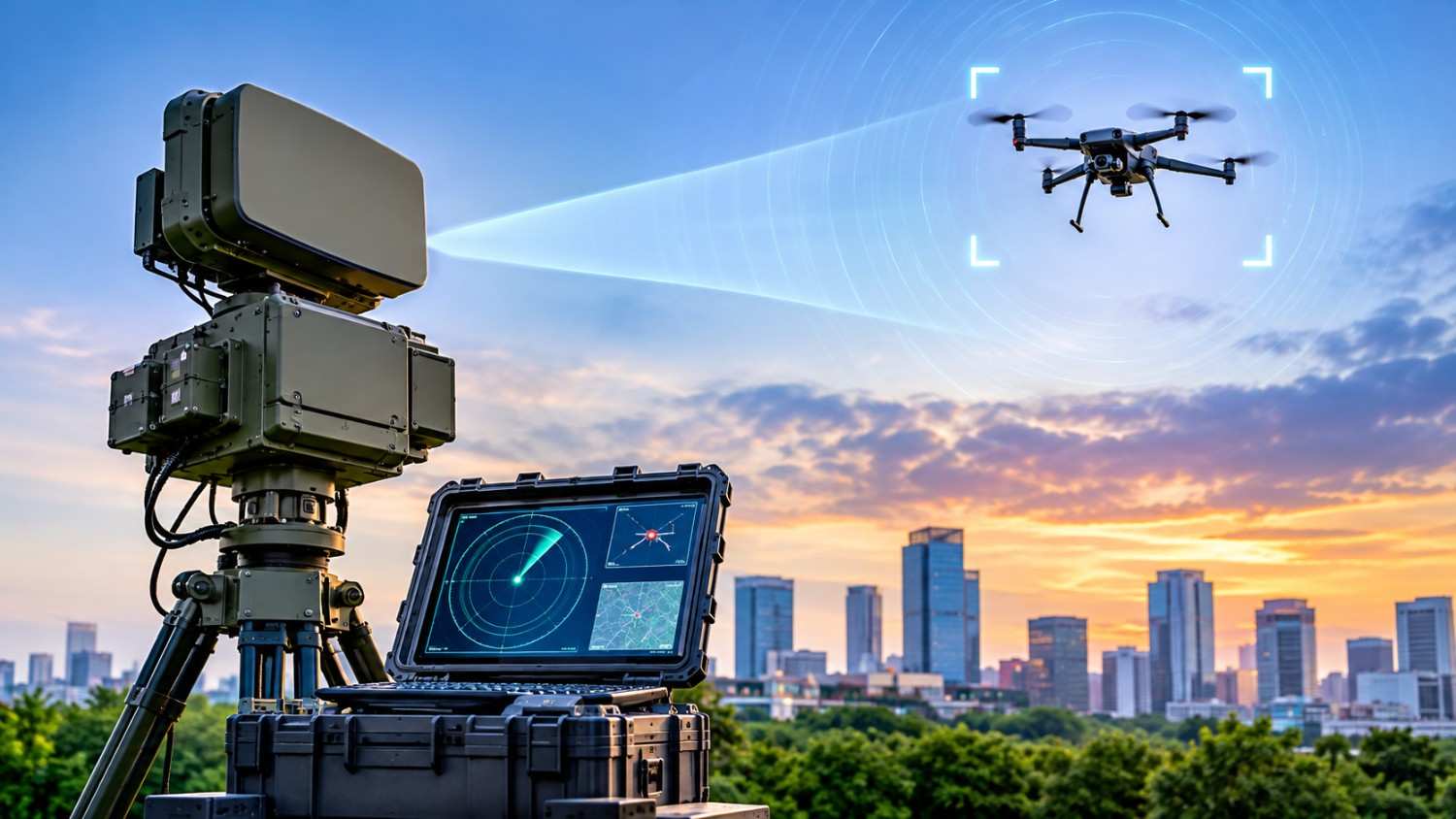
Detecting a small drone in a busy airspace environment is not always straightforward. Buildings, trees, changing weather, background signals, and other airborne objects can complicate surveillance. A modern counter drone system addresses these challenges by combining different sensing technologies to improve aerial awareness and support more informed security decisions.
Why Single-Sensor Detection Has Limitations
Every detection technology has strengths and limitations. Radar can provide information about moving objects, while radio-frequency sensors can help identify signals associated with certain remotely operated drones. Optical cameras provide visual information, and thermal imaging can support observation in suitable conditions.
However, no individual sensor necessarily provides a complete understanding of every aerial situation.
For example:
- A drone may operate without a conventional communication link.
- Visual observation may be affected by darkness or poor visibility.
- Environmental clutter can complicate radar interpretation.
- Radio-frequency activity may originate from devices other than drones.
This is why modern counter-UAS planning increasingly considers sensor fusion.
Understanding the Main Detection Technologies
Radar-based surveillance
Radar systems use transmitted and reflected electromagnetic signals to identify and track objects. Their role in drone security depends on system design, environmental conditions, and the characteristics of the target.
Radio-frequency detection
RF sensors monitor relevant radio-frequency activity. They may help identify communication links and provide information about certain drone-control signals.
Electro-optical and infrared systems
Electro-optical cameras provide visual observations, while infrared technology detects heat signatures. These tools can contribute to visual assessment and identification.
How Sensor Fusion Creates Better Awareness
Sensor fusion involves combining information from multiple sources to create a more meaningful operational picture.
Instead of asking one device to make every decision, an integrated platform can compare available observations and help operators assess:
- Whether an aerial object requires further attention.
- Whether multiple sensors are observing the same object.
- How the object is moving.
- Whether additional identification is needed.
- Which authorised response may be appropriate.
Indrajaal presents its SkyOS™ platform as an AI-enabled command-and-control system that connects counter-drone equipment into a unified architecture.
The Importance of Integrated Drone Defence
A coordinated drone defence architecture can be useful in locations where aerial activity needs continuous monitoring.
Examples include industrial facilities, border areas, military installations, and critical infrastructure.
The value of multi-sensor integration is not simply the number of devices installed. It is the quality of information sharing, the ability to interpret different inputs, and the usefulness of the resulting decisions.
Frequently Asked Questions
1. What is sensor fusion in counter-drone technology?
Sensor fusion is the process of combining information from different detection technologies to improve awareness and threat assessment.
2. What is the difference between RF and radar detection?
Radar observes objects using reflected electromagnetic signals, whereas RF detection monitors radio-frequency activity associated with certain communication systems.
3. Can thermal cameras help detect drones?
Yes. Thermal imaging can provide heat-based visual information, although effectiveness depends on environmental and equipment conditions.
4. Does AI replace human security operators?
AI can assist with analysing information and coordinating responses, but operational oversight and lawful decision-making remain important.