















A small area of friction can become surprisingly distracting during a run. The chest is especially vulnerable because a running shirt moves repeatedly across the same area as the body twists, sweats and changes pace.
For people dealing with nipple chafing, the most useful strategy is usually prevention. Waiting until irritation becomes painful means the skin has already been exposed to hundreds or thousands of repeated movements.
Why Running Creates Friction Across the Chest
Your shirt does not remain completely still while you run. Each stride produces small movements, and damp fabric can behave differently from dry fabric.
Nipple chafing runners experience may become more noticeable during longer sessions because exposure time increases. Sweat, rain, fabric texture and shirt fit can all influence the amount of friction.
Conditions That May Increase Rubbing
Common contributing factors include:
- Long-duration running
- Heavy perspiration
- Wet-weather training
- Loose or abrasive tops
- Rough seams
- Salty sweat drying on fabric
- New shirts that have not been tested
The problem is not necessarily a sign that you are wearing obviously unsuitable clothing. Sometimes a shirt performs comfortably for five kilometres but becomes irritating after 15.
Protect the Area Before Leaving Home
If you already know that chest friction affects you, prevention should happen before running.
People researching how to stop nipple chafing while running can start by creating a low-friction barrier over the vulnerable area and combining it with running clothing that stays comfortable when damp.
Apply protection to clean, dry skin before dressing so that you can cover the exact contact point.
Test Your Shirt Under Real Training Conditions
Do not judge running clothing solely by how it feels while standing indoors.
Use the shirt during progressively longer sessions and pay attention to changes caused by sweat.
Check the Fabric After It Becomes Damp
Once moisture builds up, ask:
- Does the fabric cling?
- Does it become rougher?
- Do seams shift?
- Does the shirt move excessively?
- Are you starting to notice warmth or tenderness?
These observations can help explain recurring nipple chafing runners encounter with particular clothing.
What to Do During a Run
The earliest warning sign may be mild warmth rather than pain. Take it seriously.
If practical, adjust the shirt and reapply anti-friction protection. Continuing for another hour without addressing an obvious rubbing point can make post-run discomfort considerably worse.
If the problem repeatedly occurs at similar distances, note the approximate point when symptoms begin. This can help you judge whether your protection needs to last longer or whether clothing choice is contributing.
Distance Changes the Prevention Strategy
A runner preparing for a 5K may have very different needs from someone training for a marathon.
Longer sessions mean:
- More repeated fabric movement
- Greater sweat accumulation
- More time for salt to dry
- Increased exposure to changing weather
- More opportunities for clothing to shift
That is why how to stop nipple chafing while running should be considered as part of distance preparation rather than only as a skin-care issue.
Develop a Race-Day Routine in Training
A predictable routine helps remove guesswork.
Before important events:
- Wear a shirt that has already completed a long run comfortably.
- Apply protection before dressing.
- Check weather conditions.
- Avoid unnecessary last-minute kit changes.
- Carry reapplication options if your event is particularly long.
Nipple chafing is easier to prevent than to manage once a race is underway.
What About Existing Irritation?
If the skin is already sore, the priority is to avoid creating further unnecessary friction.
Change out of sweaty clothing after running and clean the affected area gently. Consider whether the next session will continue rubbing exactly the same point.
Severe or persistent skin problems should not simply be ignored. If irritation does not settle or you are concerned about damaged skin, seek appropriate professional advice.
Create a Longer-Term Prevention Plan
The question of nipple chafing runners often becomes relevant when weekly mileage increases.
Instead of treating every episode individually, create a repeatable routine:
- Identify tops that work well.
- Retire clothing that repeatedly causes rubbing.
- Apply anti-friction protection before longer runs.
- Monitor weather conditions.
- Note when irritation starts.
- Adjust equipment before race day.
Once these habits become automatic, chest friction is less likely to catch you by surprise.
Why Choose Us
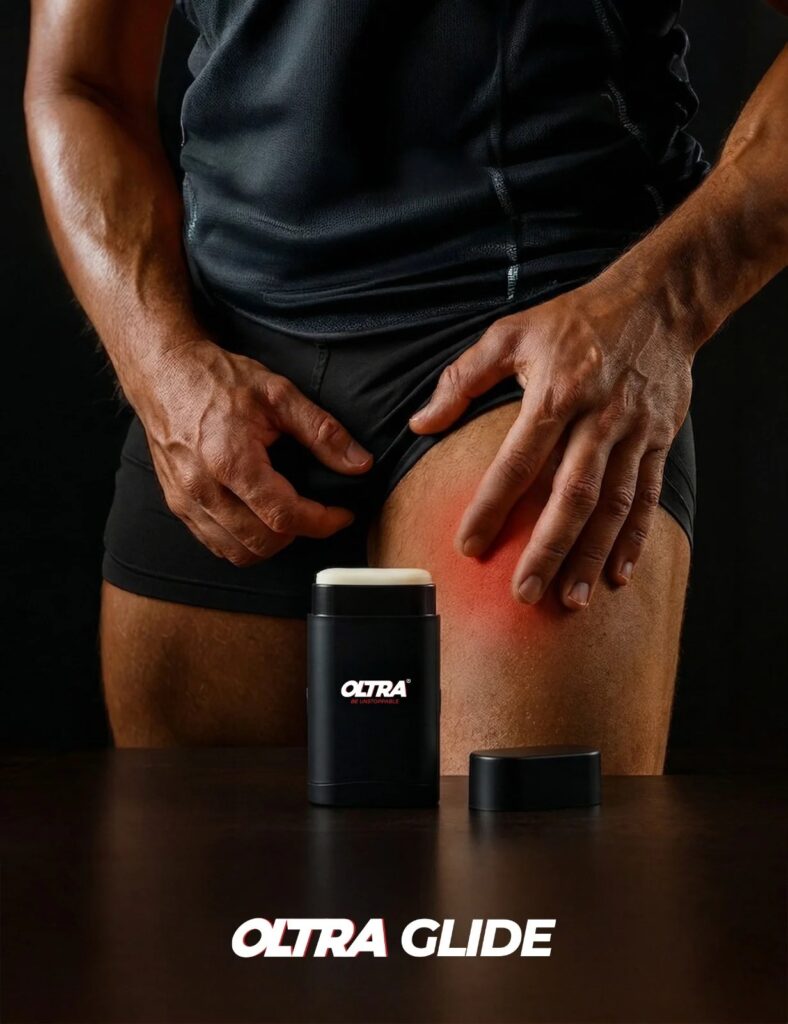
Oltra Glide is intended to make targeted anti-friction preparation straightforward for people who move, train and exercise regularly. Runners can apply it to known friction zones before a session rather than waiting until repetitive movement begins causing discomfort.
The direct approach makes skin protection easier to include alongside other pre-run habits.
About Us
At Oltra, we focus on practical products for active routines where movement and friction can affect everyday comfort. Running is a clear example: small contact points can become significant when movement continues for many kilometres.
Our goal is to support simple preparation that helps people spend less time thinking about rubbing and more time concentrating on their activity.
Conclusion
Learning how to stop nipple chafing while running starts with recognising that friction builds gradually. Tested clothing, dry-skin preparation and protection before longer sessions can make a meaningful difference.
Treat early irritation as useful feedback. Adjust your clothing and preparation while the problem is still small rather than waiting for nipple chafing to become the defining memory of your run.