
















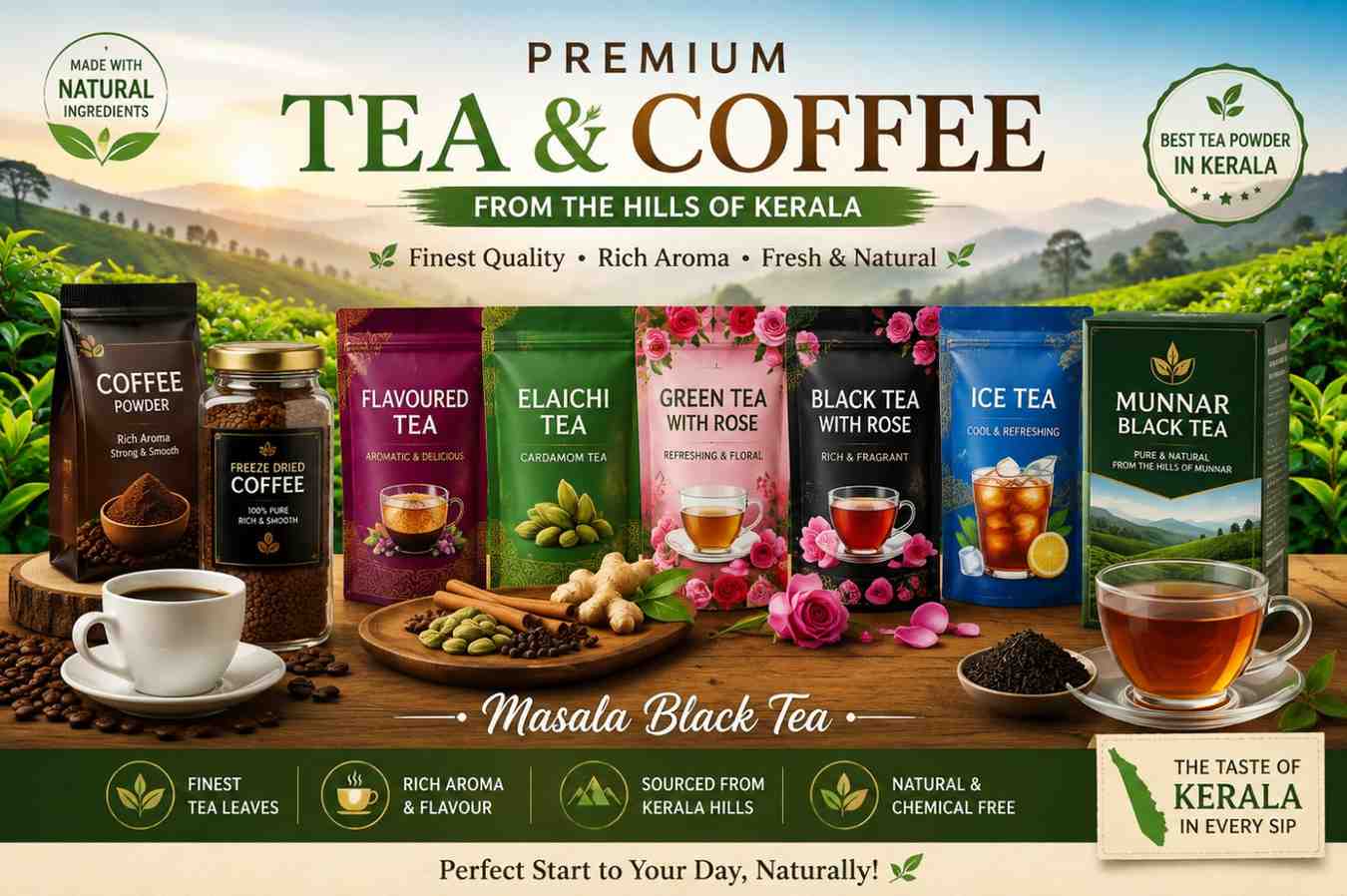
Every state in India has its tea habits, but Kerala’s relationship with tea is something else entirely. It is loud, strong, uncompromising, and deeply personal. Finding the best tea powder in kerala is not just a shopping decision — it is an education in landscape, climate, and a way of brewing that has been refined across generations. This post explores what sets Kerala tea apart, why it brews the way it does, and what to look for when you want to bring that experience home.
The Hills Behind the Cup: Kerala Tea’s Geographic Story
The story of Kerala tea is, at its core, a story of altitude. The Munnar high ranges — part of the Western Ghats — sit between 1,500 and 2,500 metres above sea level. Mist covers the gardens for much of the year. Temperatures rarely climb above 20°C even in summer.
These conditions slow the growth of the tea plant dramatically. Slow growth concentrates flavour. The leaf accumulates more aromatic compounds, more polyphenols, and a natural robustness that lower-altitude teas simply cannot replicate.
This is why Munnar-grown tea tastes different — not because of any additive or process, but because of where it grows.
The Wellness Tradition Behind Kerala’s Strong Cup
Kerala’s Ayurvedic tradition understands that environment shapes medicine. A plant grown at altitude in clean air and mineral-rich soil carries different potency than one grown in flat, hot conditions. This translates to higher theaflavin concentrations — antioxidants linked to cardiovascular and metabolic support.
Strong Kerala chai with ginger and pepper has been used for generations to manage seasonal illness, ease digestion, and warm the body during monsoon months.
The Kerala Kitchen Brewing Method
There is no standard recipe for Kerala chai — every household has its own. But there are constants. Water must boil hard. Tea goes in first. Milk is added after colour develops. The cup must be strong enough to leave a faint stain on the inside of the glass tumbler.
In most homes, the tea powder is measured generously — one and a half teaspoons per cup, sometimes more. Kerala chai is not for the faint-hearted. It is meant to wake you, ground you, and send you into the day.
Served with pazhampori (banana fritters) or ada on a rainy morning, it is one of the purest expressions of Kerala comfort food.
The Chai Stall Moment Everyone Remembers
Ask any Malayali about their most memorable cup of tea and the answer almost always involves a roadside stall — a glass tumbler, a wooden bench, rain on a tin roof, and a cup so strong it felt like intention.
Sajeev, an engineer from Palakkad now working in Pune, keeps a stock of Kerala tea powder sent monthly by his mother. “Pune has good tea,” he says. “But it doesn’t taste like this. I don’t know if it’s the powder or the memory. Maybe both.”
It is almost certainly both. But the powder makes it possible to carry that feeling across any distance.
Kerala Tea vs. Tamil Nadu, Assam, and Nilgiri Powders
Tamil Nadu teas — particularly filter coffee’s counterpart, the South Indian filter tea — are strong and aromatic, often with a lighter body than Kerala’s high-altitude blends.
Assam powders are malty and aggressive — excellent for breakfast tea but can turn harsh without careful timing. Nilgiri teas are smoother, more fragrant, often lighter in colour.
Kerala powders, especially from Munnar, hit a particular balance: bold without harshness, strong without bitterness, aromatic without being perfumed. They work beautifully as a base for masala black tea — the spice complements rather than masks the tea’s natural character.
The Spiced Dimension: Masala Chai Kerala Style
In many Kerala homes, especially during monsoon season, plain black tea gives way to something more elaborate. Ginger is crushed and added to the boiling water first, followed by a bruised cardamom pod, then the tea powder, then milk.
The result is warming in a way that goes beyond temperature — a sensory fullness that settles the body and clears the mind simultaneously. A quality masala tea blend with pre-measured spice ratio makes this ritual even more consistent and accessible at home.
The key is starting with a strong, high-altitude base tea that can hold the spice without disappearing behind it.
Frequently Asked Questions
Q: What makes Kerala tea powder different from other Indian tea powders?
Munnar’s high altitude (1,500–2,500m) produces slower-grown leaves with more concentrated flavour compounds and antioxidants. The result is a bolder, cleaner cup than most plains-grown teas.
Q: Is Kerala tea powder suitable for masala chai?
It is ideal. Its natural boldness pairs perfectly with ginger, cardamom, and clove without becoming bitter or losing identity under the spices.
Q: What is masala black tea?
Masala black tea is black tea blended with natural whole or ground spices — typically ginger, cardamom, cinnamon, and clove. It is warming, aromatic, and a traditional wellness brew.
Q: How do I know if a Kerala tea powder is genuinely from Munnar?
Look for estate sourcing or single-origin labelling. Authentic Munnar powder has a distinctly earthy, robust aroma. Vague “Kerala blend” labels without origin detail are a red flag.
Q: Can I use Kerala tea powder to make iced tea?
Yes. Brew double strength, cool completely, then pour over ice. Kerala tea holds its flavour and colour well when cold — a surprisingly bold iced brew.
Conclusion: The Cup That Knows Where It Comes From
There is a confidence to a great cup of Kerala tea — a boldness that comes not from any additive or trick of processing, but from the land itself. The mist, the altitude, the soil, and the generations of careful cultivation all pour into that morning tumbler.
When you choose well — when you choose tea that knows where it came from — you taste that confidence. And somehow, the day that follows tends to carry a little of it too.
#RippleTea #BestTeaPowderKerala #MasalaTea #TeaLoversIndia