
















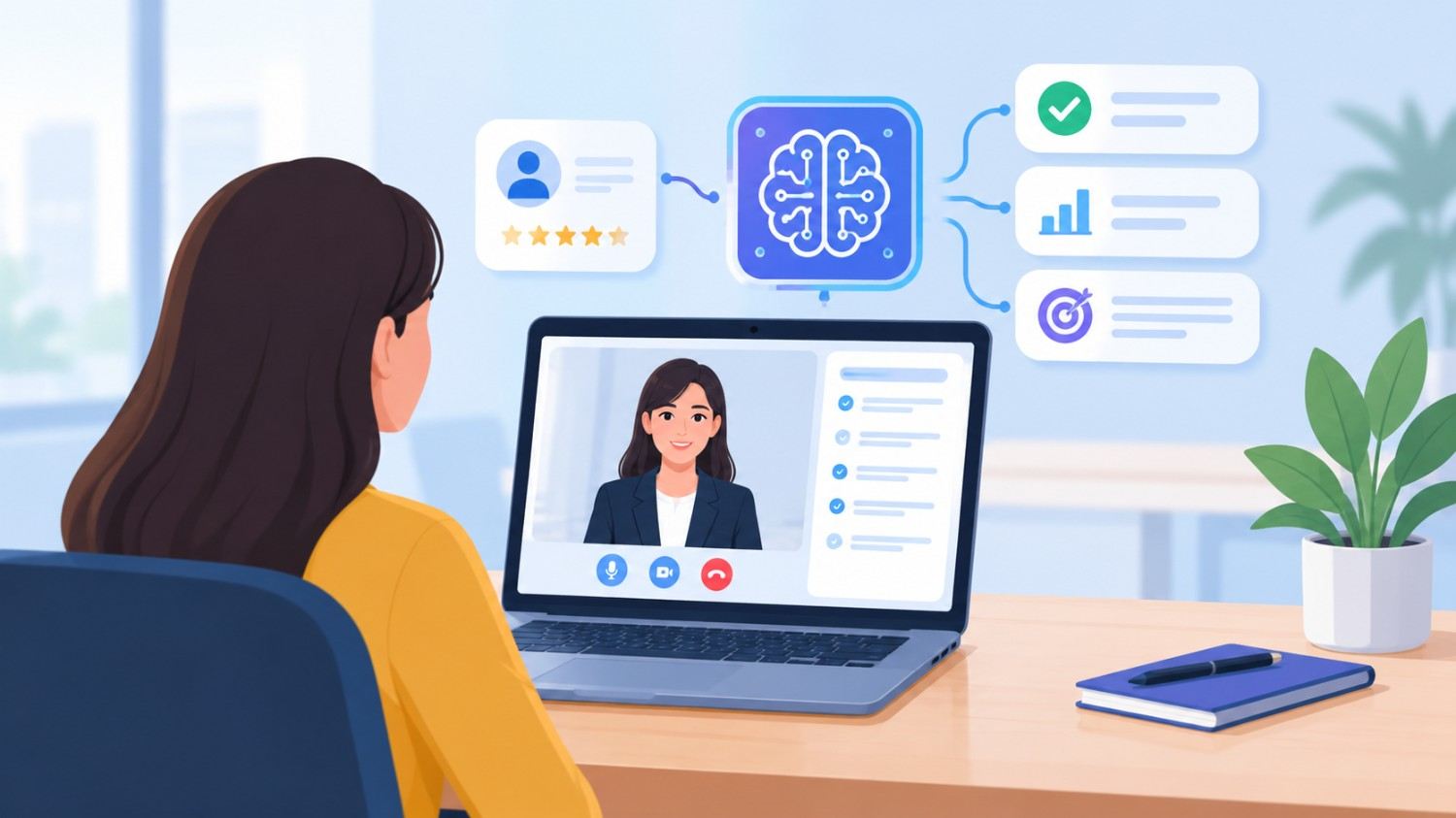
Interview consistency is a common challenge for recruitment teams. Even when interviewers are experienced, different people may ask different questions, focus on different competencies, and interpret answers differently.
This becomes especially difficult when companies hire across multiple locations or departments.
AI-based interview software can help standardize candidate interviews by creating consistent evaluation frameworks, structured questioning, and comparable reporting.
Why Interview Standardization Matters
A standardized interview does not mean every candidate must have an identical conversation.
Instead, standardization means candidates are assessed against the same relevant competencies and evaluation principles.
For example, a product manager might be evaluated on product thinking, analytical reasoning, communication, stakeholder management, and execution.
The questions can adapt to the candidate while the evaluation framework remains consistent.
Defining the Interview Framework
Before implementing technology, organizations should identify the competencies required for the role.
Hiring managers and recruiters should agree on:
- Core competencies
- Required technical knowledge
- Behavioral expectations
- Evaluation criteria
- Evidence that demonstrates proficiency
This becomes the foundation of the interview.
Consistent Questioning
Interviewers can unintentionally vary their questioning.
One candidate may receive detailed follow-up questions, while another may receive a shorter interview.
AI-supported interviewing can provide a consistent structure while allowing relevant follow-up questions.
This can help ensure that candidates have comparable opportunities to demonstrate their capabilities.
Competency-Based Evaluation
A standardized interview should evaluate specific skills rather than relying primarily on overall impressions.
For example, instead of asking whether a candidate “seems strong,” the evaluator can assess technical depth, problem-solving, communication, and role-specific expertise separately.
This produces more structured evidence.
Reducing Interviewer Variation
Different interviewers have different communication styles.
Some may be highly conversational, while others are more direct.
Technology can reduce the impact of these differences during selected interview stages by applying a consistent framework.
Human interviewers can then focus on areas where their expertise and judgment are particularly important.
Creating Comparable Reports
Standardization also applies to reporting.
If every candidate receives a report organized around the same competencies, hiring managers can compare evidence more easily.
This can improve the quality of hiring discussions.
Scaling Across Locations
Global and multi-location organizations often face consistency challenges because recruitment teams operate differently.
A standardized digital interview framework can provide common evaluation principles across locations.
Local recruitment teams can still adapt communication and scheduling practices while maintaining shared competency standards.
Supporting Technical Hiring
Technical recruitment is another area where standardization can be valuable.
Different interviewers may have different technical specialties.
A structured evaluation framework can define what the organization expects candidates to demonstrate, even when interviewers differ.
This can help reduce unnecessary variation.
Human Oversight Remains Important
Standardization should not remove human judgment.
Some candidates have unusual career paths, specialized experience, or circumstances that require context.
Hiring managers should therefore review structured results alongside relevant candidate information.
Technology can improve consistency without turning recruitment into an entirely automated decision.
Measuring the Effect of Standardization
Organizations can measure whether standardization is working.
Possible indicators include interviewer agreement, feedback completeness, candidate progression consistency, hiring-manager satisfaction, and candidate experience.
These measurements can reveal whether the new process is actually improving recruitment.
Bese on our best AI-based interview software can help organizations standardize candidate interviews by aligning questioning and evaluation with predefined competencies. It can reduce unnecessary interviewer variation, produce structured candidate reports, and make large-scale hiring easier to manage.
The strongest implementation does not attempt to make every conversation identical. Instead, it creates a consistent evaluation foundation while allowing interviews to adapt to the candidate and role.
This combination of structure and flexibility can help recruitment teams build more transparent and repeatable interview processes.