
















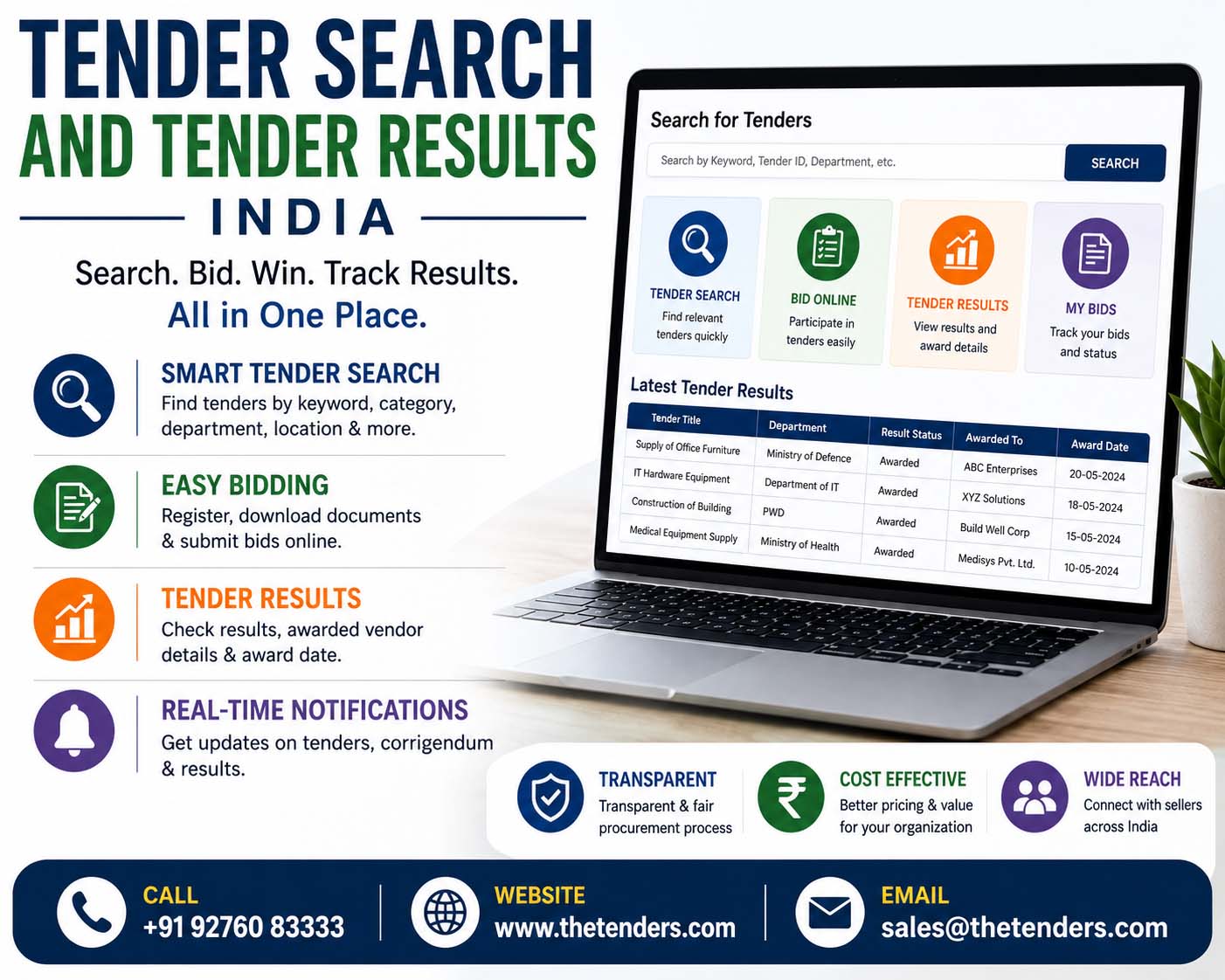
A government tender can become a valuable business opportunity, but only when a company finds the right opportunity at the right time. With numerous procurement requirements being published across different categories, manually checking every listing can consume significant time. A structured GeM Tender Search approach allows businesses to narrow their focus and identify government opportunities that match their products, services, experience, and operational capabilities.
For manufacturers, suppliers, service providers, contractors, and MSMEs, effective tender research can become an important part of business development. The objective is not simply to find more tenders, but to identify opportunities that are realistic and commercially relevant.
Understand What You Can Offer
Before beginning a tender search, businesses should have a clear understanding of their own capabilities. This includes the products they supply, services they provide, geographical coverage, technical expertise, certifications, and previous project experience.
A company that understands its strengths can create more focused search criteria. For example, a technology company may concentrate on software, hardware, cybersecurity, or IT support requirements instead of reviewing unrelated procurement categories.
This simple step can significantly reduce irrelevant search results.
Search by Category and Requirement
Government procurement covers a wide range of products and services. Searching with broad terms may generate too many results, while an overly narrow search could cause relevant opportunities to be missed.
Businesses can experiment with different product names, service descriptions, categories, and related terms. They should also review the specifications carefully because procurement requirements may use terminology that differs from the language commonly used by suppliers.
A consistent GeM Tender Search routine can help businesses become familiar with these patterns over time.
Check Deadlines Before Investing Resources
Tender deadlines deserve immediate attention. A business may find an attractive opportunity but have insufficient time to prepare the required documentation.
When reviewing a tender, the submission deadline should be one of the first details checked. Companies should also consider how much time they need to prepare technical documents, commercial information, declarations, certificates, and other supporting materials.
Finding an opportunity early provides more room for internal review and reduces pressure close to the deadline.
Read Eligibility Conditions Carefully
A tender’s description may appear suitable while its eligibility criteria tell a different story.
Businesses should carefully review requirements related to:
- Minimum turnover
- Previous experience
- Technical qualifications
- Product standards
- Certifications
- Registration requirements
- Location or service conditions
- Financial and statutory documents
Eligibility requirements can vary significantly between procurement opportunities. Businesses should therefore assess each tender independently rather than assuming that previous qualification means they will automatically qualify for another tender.
Analyze Previous Tender Results
Previous tender results can provide useful information when evaluating future opportunities. Depending on the information available, businesses may be able to study procurement categories, participating organizations, awarded suppliers, and purchasing patterns.
This research can help answer practical questions. Is the department regularly purchasing this type of product? Has a similar requirement appeared before? Are there recurring procurement cycles?
Historical information should not be treated as a guarantee of future outcomes, but it can provide useful market context.
Turn Tender Data Into Business Intelligence
Tender research can go beyond individual bid submissions. Over time, businesses can build an understanding of government purchasing patterns.
For example, a manufacturer may identify certain departments that repeatedly purchase its product category. A service company might discover that particular regions regularly publish requirements related to its specialization.
This information can support broader sales planning and market research.
Technology can make this process easier by helping organizations collect, organize, and analyze large amounts of procurement information. As procurement becomes increasingly digital, businesses can benefit from treating tender information as a source of commercial intelligence rather than simply a list of bids.
Create an Internal Tender Checklist
A simple checklist can help teams decide whether an opportunity deserves further attention.
Before proceeding, ask:
Does the requirement match our offering?
If the product or service is outside the company’s core capability, the tender may not be suitable.
Do we meet the eligibility criteria?
Review every mandatory qualification before spending significant preparation time.
Can we meet the delivery requirements?
Businesses should consider production capacity, staffing, logistics, and geographic requirements.
Are the commercial terms acceptable?
Pricing should be evaluated after considering operational costs, taxes, logistics, staffing, and other relevant expenses.
Can we submit before the deadline?
A realistic preparation timeline is essential for avoiding rushed submissions.
Keep Business Documents Ready
Tender preparation becomes easier when commonly required documents are already organized.
Companies should maintain updated copies of relevant registrations, tax documents, financial records, technical certificates, company profiles, product information, previous work credentials, and other commonly requested materials.
A document management system or structured internal folder can save considerable time when a new opportunity requires quick action.
Avoid Treating Every Tender as a Bid
One of the most important lessons in tendering is that finding an opportunity does not mean the business must bid.
A company should evaluate whether the opportunity matches its strategy, capabilities, resources, and commercial objectives. Selective bidding can allow teams to spend more time preparing submissions where there is a genuine business fit.
This approach also helps prevent employees from spending valuable hours preparing bids for opportunities that were unlikely to be suitable from the beginning.
Make Tender Discovery a Regular Activity
Businesses that want to develop government procurement as a long-term sales channel should make tender research part of their regular routine.
Checking relevant opportunities, studying new requirements, monitoring deadlines, and reviewing previous results can gradually improve a company’s understanding of the procurement environment.
The process becomes even more useful when search activity is combined with internal knowledge about products, pricing, delivery capabilities, and documentation.
Conclusion
A successful government procurement strategy begins long before a bid is submitted. Businesses first need to identify suitable opportunities, understand the requirements, evaluate eligibility, and determine whether the project fits their capabilities.
A well-planned GeM Tender Search can make this discovery process more focused and efficient. When combined with tender-result analysis, organized documentation, and careful opportunity evaluation, it can help businesses approach government procurement with greater preparation and clarity.
For companies looking to build a sustainable presence in the government procurement market, consistent research and informed decision-making can be valuable foundations for future growth.