















Behind every pane of glass, every length of PVC pipe, and every batch of detergent lies a fundamental mineral that acts as the unsung hero of modern manufacturing. While common table salt is a household staple, it is the high-purity industrial grade that serves as the lifeblood of the global chemical sector. As demand for sophisticated chemicals and textiles surges, the role of industrial salt manufacturers in india has become more pivotal than ever. These producers are no longer just local suppliers; they are strategic partners for international industries, providing the raw materials necessary to drive complex chemical reactions at a massive scale.
The Geography of Purity: Why Gujarat Leads
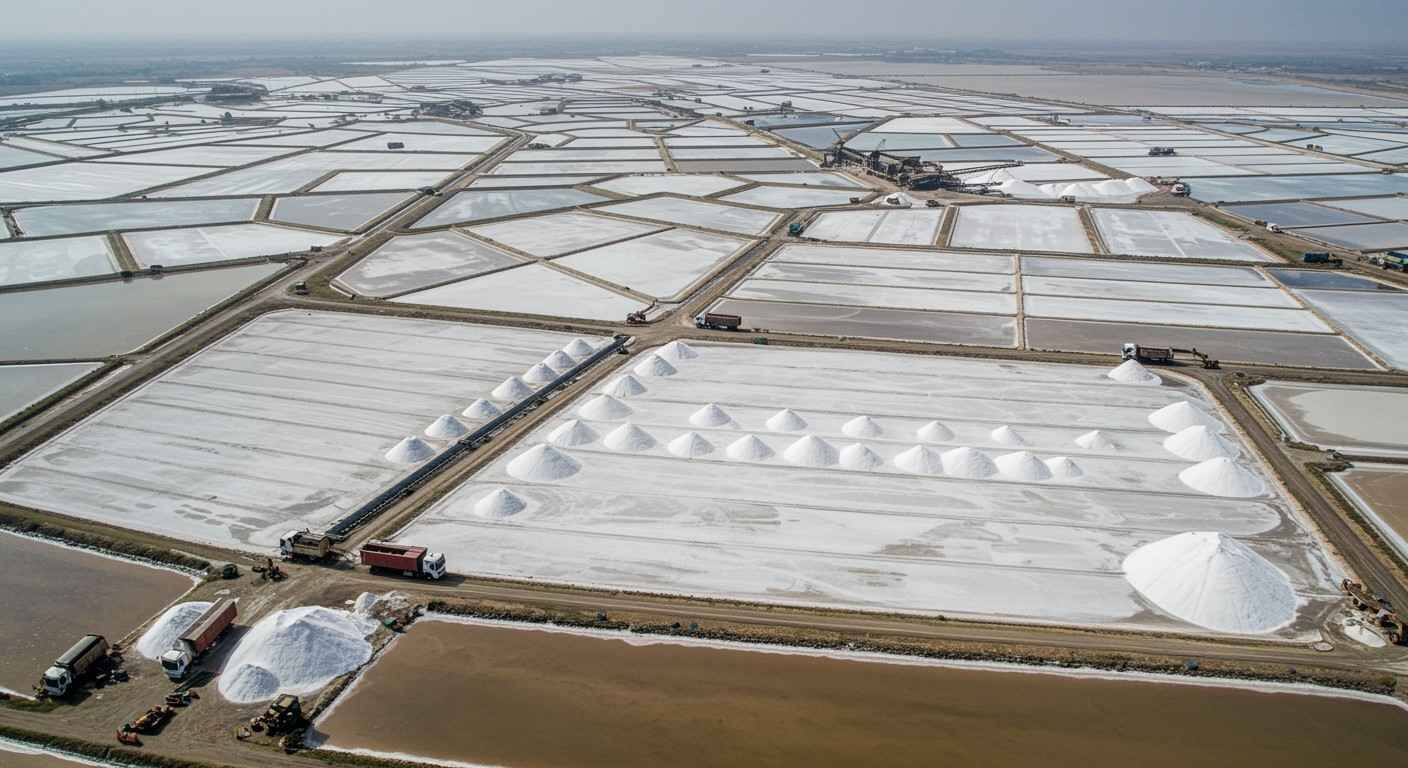
The quality of industrial salt is dictated by the environment in which it is harvested. India’s western coastline, particularly the arid stretches of Gujarat, offers a rare combination of high solar radiation and low rainfall. This natural laboratory allows for the production of salt with naturally high sodium chloride (NaCl) content. By leveraging these geographical advantages, industrial salt manufacturing companies in india can produce a “Grade-A” product that boasts purity levels exceeding 99%. This level of refinement is essential for the Chlor-Alkali industry, where even minute impurities can damage expensive electrolytic membranes.
Essential Applications in Modern Manufacturing
Industrial salt is far more than a simple additive; it is a primary reagent. In the textile industry, it is used to “standardize” dyes, ensuring that colors bond evenly to fabrics. In water treatment facilities, coarse salt crystals are used to regenerate ion-exchange resins, removing hardness and protecting industrial boilers from scale buildup.
As noted by trade and industry analysts at Entrepreneur, the consistency of raw material supply is a critical factor in maintaining the “just-in-time” manufacturing cycles of the 21st century. Whether it is for leather tanning, oil drilling fluids, or the production of caustic soda, the reliability of the salt supplier determines the efficiency of the entire production line.
Technological Precision and Quality Control
The transition from raw brine to a finished industrial product involves a rigorous refining process. Modern Indian manufacturers employ mechanical wash plants that remove insoluble matter, sulfate, and magnesium impurities. Every batch is subjected to strict laboratory testing to verify grain size and chemical composition.
This data-backed approach provides international procurement teams with the confidence they need. For industries like glass manufacturing, where high-purity salt is used to remove impurities from the melt, there is no room for error. Consistent quality ensures a crystal-clear final product and reduces the risk of expensive furnace damage.
Sustainability and Eco-Friendly Harvesting
One of the most compelling reasons to source from India is the sustainability of the solar evaporation process. Unlike deep-shaft rock salt mining, solar salt harvesting relies on the renewable energy of the sun and wind. This low-carbon method aligns perfectly with the environmental, social, and governance (ESG) goals of modern global corporations. By optimizing brine management and protecting local coastal ecosystems, Indian manufacturers are proving that industrial-scale production can coexist with environmental responsibility.
Securing Your Industrial Foundation
Success in the chemical and manufacturing sectors starts with the integrity of your raw materials. By partnering with established industrial salt manufacturers in india, businesses secure a high-purity product that is as reliable as it is cost-effective. In a world where supply chains are increasingly volatile, having a partner with deep geographical and technical expertise is a significant competitive advantage.