
















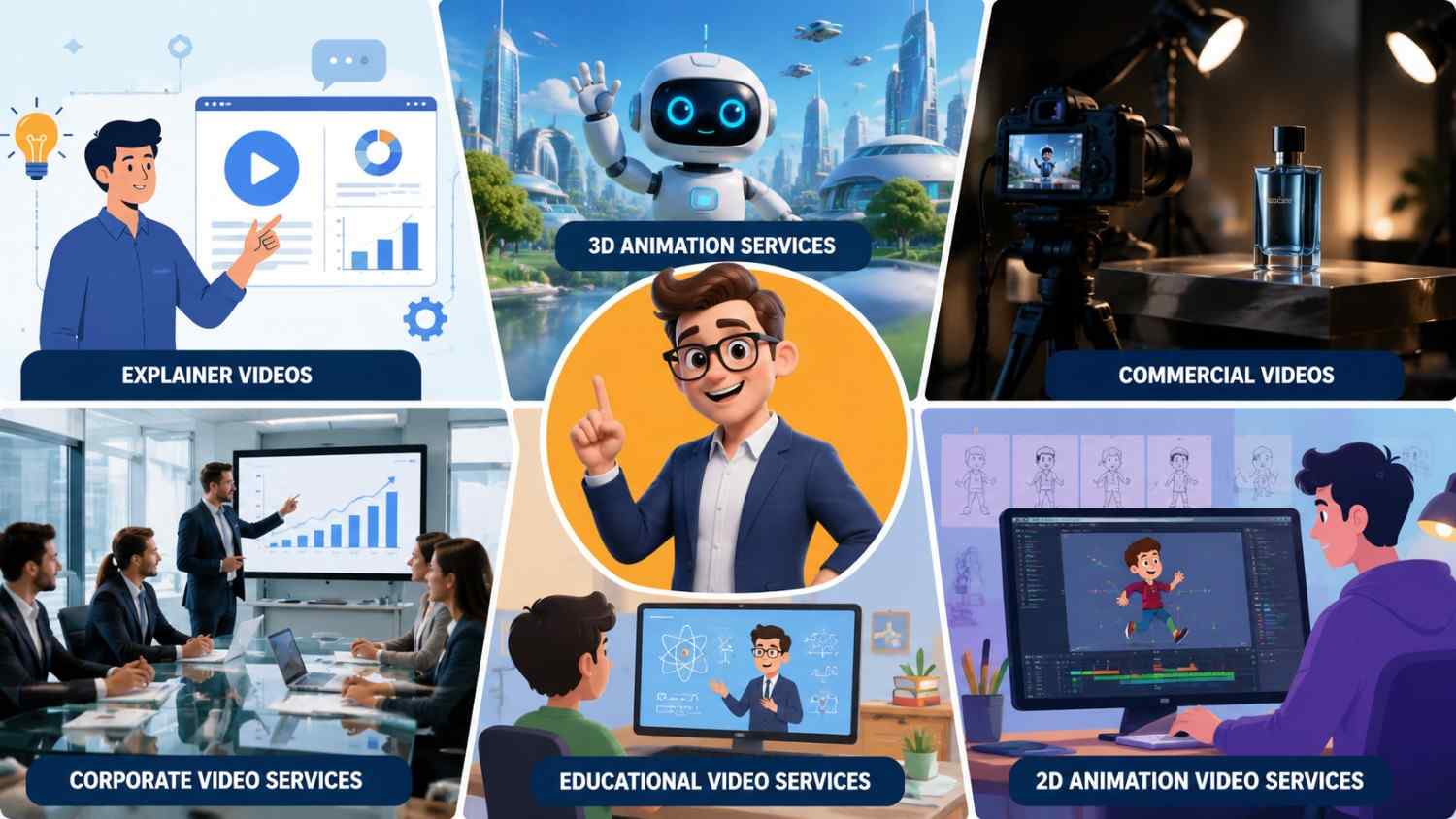
Marketing teams are running out of patience with flat, static content. As audiences scroll faster and attention spans shrink further, businesses across industries are shifting budgets toward formats that can hold a viewer’s eye for more than a few seconds. That shift is putting 3D animation at the centre of modern brand communication, and the numbers back it up: video content built around depth, motion and realism is converting better than traditional static ads or plain explainer videos across almost every digital channel.
From Novelty to Necessity
A few years ago, 3D animation was treated as a luxury reserved for big budget product launches or entertainment studios. That perception has changed. Today, product companies, real estate developers, healthcare brands, and even SaaS startups are commissioning 3D visuals to explain complex ideas that plain text or photography simply cannot capture. A three dimensional walkthrough of a product, a CGI render of an unbuilt property, or an animated breakdown of a technical process gives audiences something photography and copy cannot: the ability to see how something works from every angle, in a controlled and polished environment.
Industry data reflects this appetite. Reports tracking the video production and motion design space show steady, sustained growth in demand for 3D services, with agencies expanding their rosters of 3D artists faster than any other creative discipline in the last two years. The reason is straightforward: 3D animation does not just decorate a marketing message, it clarifies it. Viewers retain information better when it is shown through movement and dimension rather than described in a paragraph or a static graphic.
Where 3D Animation Is Making the Biggest Impact
Several sectors are leading this adoption curve:
Real estate and architecture firms use 3D walkthroughs to sell properties before a single brick is laid, cutting sales cycles and reducing the need for physical show units.
Product based businesses rely on 3D renders and explainer animations to demonstrate features that are hard to photograph, such as internal mechanisms or software interfaces.
Healthcare and pharmaceutical brands use 3D animation to simplify clinical processes for patients and stakeholders who are not familiar with technical jargon.
Event and experiential marketing teams are increasingly commissioning immersive 3D content for exhibitions, launches and brand activations, pairing it with projection mapping and augmented reality for a layered audience experience.
This diversification is significant. It shows that 3D animation has moved out of the entertainment silo and into the everyday marketing toolkit of businesses that need to explain, persuade and engage, often within the first few seconds of a video.
The Studios Behind the Shift
This growing demand has also reshaped the production landscape. Studios that once focused purely on entertainment content are now building dedicated commercial and marketing divisions, and new specialist agencies have emerged to serve brands directly. Bengaluru based studio Aadhya Animatics is one example of this new generation of production houses, offering dedicated 3D animation services that span product visualization, CGI driven brand films, and immersive explainer content for companies looking to communicate more visually. The studio’s broader portfolio also extends into VFX, projection mapping and extended reality work, reflecting how closely 3D animation is now tied to other immersive marketing formats rather than existing as a standalone service.
This pattern is not unique to one region. Across the video production landscape, agencies are increasingly bundling 3D animation with allied services such as motion graphics, CGI compositing and interactive media, giving brands a single production partner instead of multiple vendors for what used to be separate deliverables.
What This Means for Brands Planning Their Next Campaign
For marketing teams weighing where to invest limited production budgets, the practical takeaway is straightforward: 3D animation is no longer an experimental add on, it is becoming a default expectation for brands that want to stand out in crowded digital feeds. Businesses evaluating a 3D animation partner should look closely at three things: the studio’s ability to simplify complex information visually, its experience across formats such as CGI, motion design and interactive content, and its track record of tailoring output to a brand’s specific audience rather than delivering generic templates.
As competition for audience attention intensifies through the rest of 2026, the brands that invest early in high quality 3D storytelling are likely to hold a communication advantage over those still relying on static content, a gap that industry analysts expect to widen rather than close.