















Maintaining a pristine industrial environment is not merely about aesthetics; it is a fundamental pillar of operational efficiency, workplace safety, and equipment longevity. In large-scale facilities like warehouses, manufacturing plants, and distribution centers, dust and debris are more than just a nuisance—they are abrasive elements that can damage inventory and pose respiratory risks to employees.
When transitioning from manual sweeping to mechanical solutions, the market can seem overwhelming. As leading floor sweeper manufacturers, we understand that the technical specifications of a machine must align perfectly with the specific demands of your facility. Choosing the right Sweeper and Scrubber technology requires looking beyond the price tag and evaluating the core engineering that drives performance.
To ensure you invest in a machine that delivers high ROI and consistent results, here are the top five essential features to look for in an industrial floor sweeper.
1. Advanced Dust Control and Filtration Systems
The primary difference between a high-quality industrial sweeper and a standard broom is the ability to manage airborne particles. In an industrial setting, sweeping up heavy debris like wood chips or metal shavings is only half the battle; the real challenge is containing the fine “PM10” and “PM2.5” dust that often kicks up during the process.
A top-tier ride-on floor sweeper must be equipped with a high-performance vacuum fan and a multi-stage filtration system. Look for machines that offer:
- Large Filter Surface Area: The larger the filter, the less often it will clog, allowing for longer continuous run times.
- Automated Filter Shakers: Manual cleaning of filters is often neglected by operators. An automatic electric shaker vibrates the filter at set intervals, knocking dust back into the hopper and maintaining maximum suction.
- Sub-Micron Filtration: For facilities with sensitive electronics or food products, filters capable of capturing dust as small as 1 to 3 microns are essential for maintaining air quality.
Without a robust dust control system, a sweeper simply redistributes fine dust into the air, where it eventually settles back onto your products and machinery.
2. Robust Hopper Capacity and High-Dump Capabilities
The efficiency of your cleaning routine is often dictated by “uptime”—the amount of time the machine is actually on the floor sweeping versus the time spent traveling to a trash bin to empty. This is where hopper capacity becomes a critical factor.
For large-scale operations, a warehouse sweeper machine should have a hopper designed for both volume and weight. However, the size of the hopper is only part of the equation; you must also consider how that waste is disposed of.
- Manual Dump: Suitable for smaller, walk-behind units where the debris is light.
- Multi-Level High Dump: On larger ride-on models, a hydraulic high-dump system allows the operator to lift the hopper and empty the debris directly into a standard industrial dumpster. This eliminates the need for manual lifting, significantly reducing the risk of worker injury and cutting down disposal time from minutes to seconds.
[Image suggestion: A ride-on sweeper demonstrating the hydraulic high-dump feature into a large waste container]
3. Brush Technology and Main Broom Design
The “business end” of any sweeper is the brush system. An effective industrial sweeper typically utilizes a combination of side brushes and a cylindrical main broom.
When evaluating these components, look for:
- Self-Leveling Main Brooms: Floors are rarely perfectly flat. A self-leveling brush automatically adjusts its height to maintain consistent pressure against the floor, ensuring it picks up everything from fine sand to large cans in a single pass.
- Tool-Free Brush Replacement: In a high-volume facility, brushes will eventually wear out. If it takes an hour and a specialized toolkit to change a broom, your cleaning schedule will suffer. Modern designs allow for “click-and-change” replacements that take less than five minutes.
- Variable Brush Pressure: The ability to increase downward pressure is vital for “scrub-sweeping” areas with compacted dirt or heavy industrial grime.
4. Power Source and Runtime Efficiency
In the modern industrial landscape, the shift toward sustainability and indoor air quality has made battery power the gold standard. While internal combustion engines (LPG or Diesel) are still used for outdoor parking lots, indoor environments almost exclusively require electric models.
When researching floor scrubber manufacturers and sweeper suppliers, prioritize the battery technology.
- Lead-Acid vs. Lithium-Ion: Lead-acid batteries are cost-effective but require maintenance (watering). Lithium-ion offers faster charging, longer life cycles, and “opportunity charging” (charging during lunch breaks), which is ideal for multi-shift operations.
- Energy Recovery Systems: Some advanced sweepers utilize regenerative braking or high-efficiency motors to extend the runtime, allowing a single charge to cover hundreds of thousands of square feet.
5. Maneuverability and Operator Ergonomics
A machine is only as effective as the person operating it. If a sweeper is difficult to steer or uncomfortable to sit in, it will not be used to its full potential.
For a ride on a floor sweeper, maneuverability is measured by its turning radius. In narrow warehouse aisles, the ability to turn 360 degrees within its own length is a massive advantage. Furthermore, look for:
- Intuitive Controls: One-touch operation buttons that simplify the training process for new staff.
- All-Around Visibility: The operator should have a clear line of sight to the side brushes to prevent collisions with pallet racks or walls.
- Adjustable Seating: To prevent operator fatigue during long shifts, which directly impacts the thoroughness of the cleaning.
The Importance of a Unified Cleaning Strategy
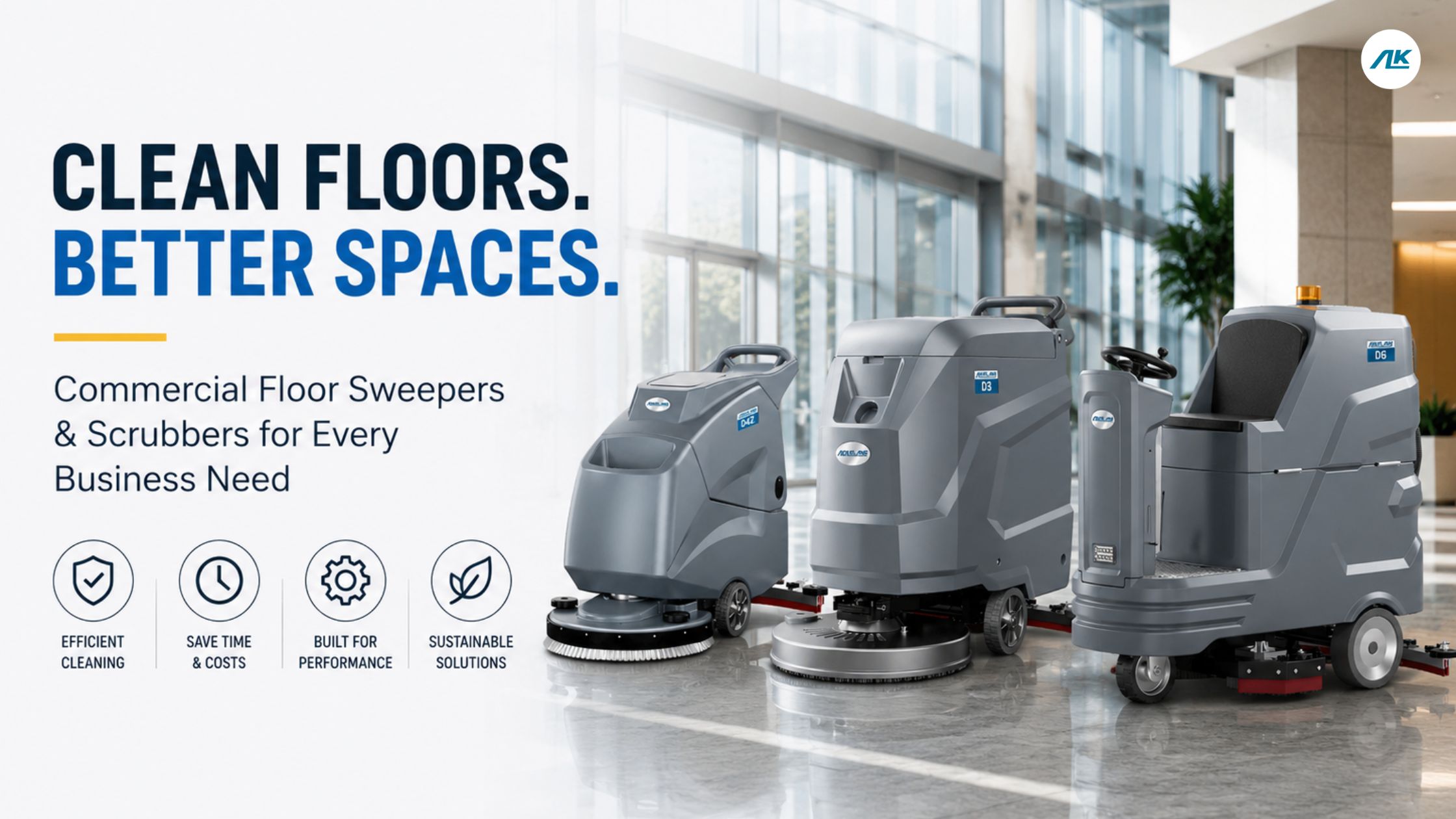
Investing in an industrial sweeper is a major step toward a safer facility, but it is often most effective when paired with a comprehensive Warehouse Floor Cleaning strategy. Many facilities find that a “dual-stage” approach—using a sweeper to remove dry debris followed by an automatic scrubber to remove stains and grease—provides the best results for long-term floor preservation.
Final Checklist for Buyers:
- Survey your debris: Is it mostly dust, or is it heavy material like gravel and metal?
- Measure your narrowest aisle: Ensure the machine’s width and turning radius can navigate your tightest spaces.
- Evaluate your power needs: Do you have the charging infrastructure for electric, or do you need the unlimited runtime of a gas-powered outdoor unit?
- Service and Parts: Always choose a manufacturer that provides easy access to wear-and-tear parts like squeegees, brushes, and filters.
By focusing on these five core features—filtration, hopper design, brush technology, power efficiency, and ergonomics—you will ensure that your facility remains a benchmark for industrial cleanliness and operational excellence. At Aokelang, we pride ourselves on engineering machines that excel in these specific categories, providing robust solutions for the world’s most demanding environments.